
How a Google Ads Agency Helps Businesses Generate Quality Leads
Introduction
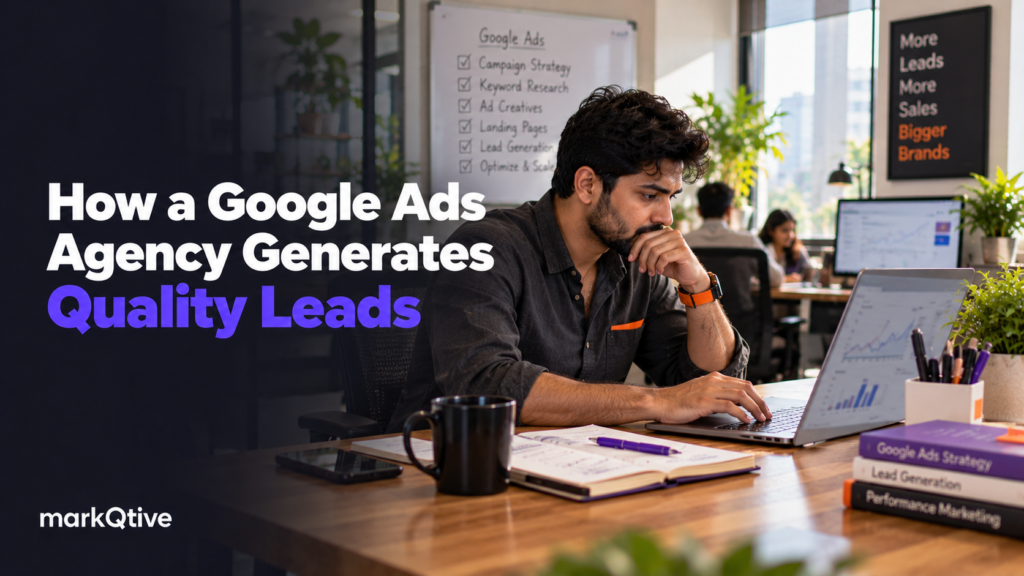
Getting website visitors is one thing. Finding people who actually want to buy is another. A campaign can generate hundreds of clicks and still leave your sales team wondering where the customers went.
A google ads agency helps businesses connect advertising spend with relevant search demand, qualified enquiries, and measurable sales opportunities. Its work goes beyond launching advertisements. It involves understanding customer intent, selecting suitable keywords, improving landing pages, and tracking what happens after someone clicks.
However, hiring an agency does not automatically guarantee better results. The quality of your offer, competition, website, and sales process all influence performance.
What Does a Google Ads Agency Do?
A Google Ads agency plans, launches, manages, and improves paid advertising campaigns. Depending on the business, these campaigns may target people searching for specific services, watching relevant videos, or exploring products online.
The agency researches keywords, structures campaigns, writes advertisements, manages budgets, and analyses conversion data. It may also recommend improvements to landing pages and enquiry forms.
For example, a Pune based interior design company might target homeowners searching for residential interior designers rather than paying for broad searches related to home decoration.
The distinction matters because relevant searches can bring prospects closer to requesting a consultation.
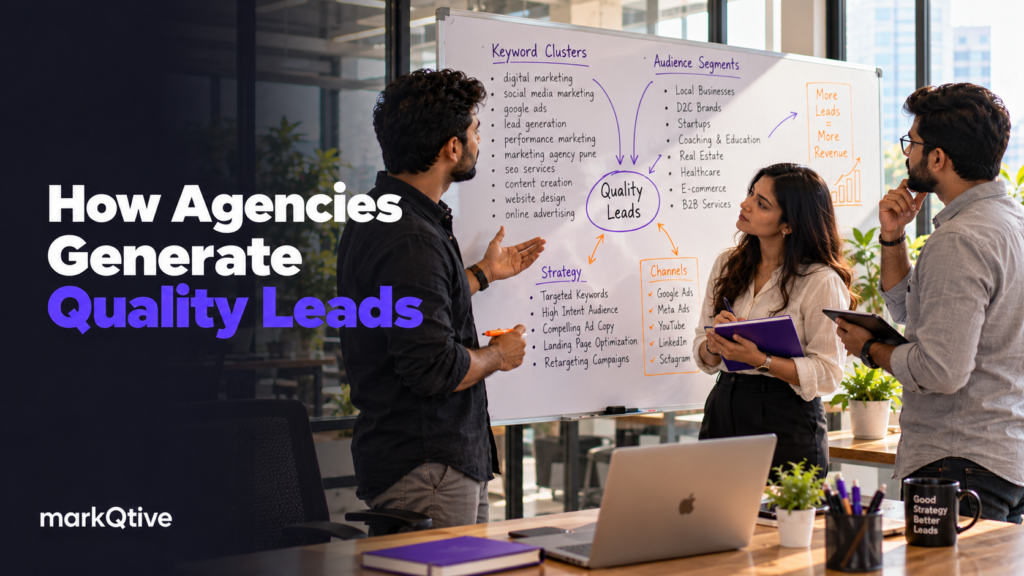
How Agencies Generate Quality Leads
1. Understand customer search intent
Not every search indicates the same level of interest. Someone searching for marketing advice may be researching, while someone looking for a specific service provider may be comparing potential suppliers.
An experienced team groups keywords according to intent and creates advertisements that match those needs.
2. Target relevant audiences
Location settings, language, keyword selection, and campaign exclusions help reduce irrelevant traffic. A local service provider should not spend money attracting enquiries from areas it cannot serve.
3. Improve advertisements
Effective advertisements explain the service, communicate a useful benefit, and provide a clear next step. Claims should remain accurate. Promising guaranteed results might attract attention, but misleading expectations rarely produce healthy customer relationships.
4. Create relevant landing pages
After clicking an advertisement, visitors should find information that matches their search. A dedicated page with service details, proof of experience, useful answers, and a clear enquiry option can reduce confusion.
5. Track conversions
An agency should measure meaningful actions such as qualified calls, completed forms, booked consultations, and purchases. Clicks alone cannot show whether advertising contributes to revenue.
Why Lead Quality Matters More Than Clicks
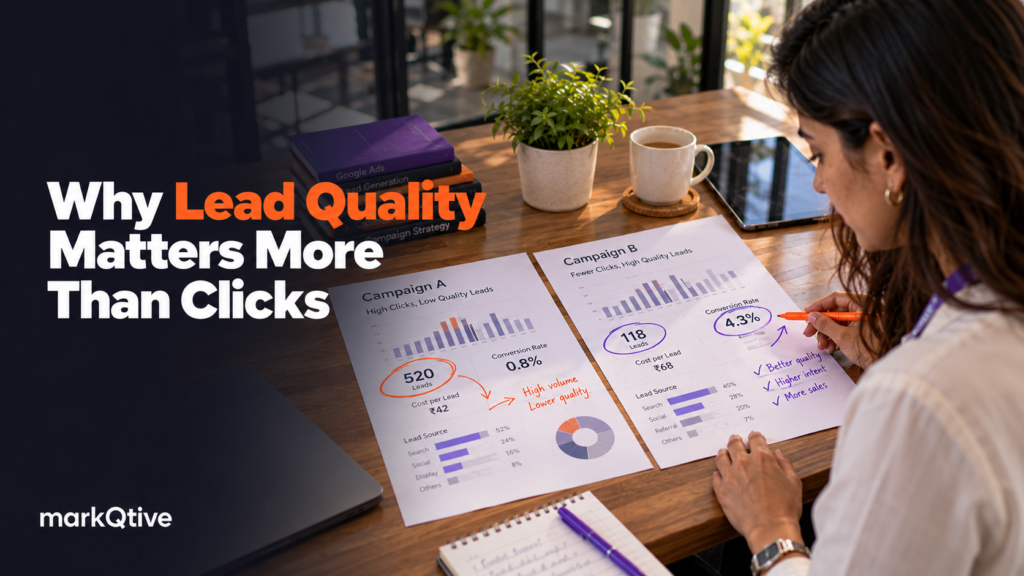
Consider a hypothetical business that receives 100 enquiries from one campaign and 30 from another. The first campaign appears stronger because it generates more leads.
However, suppose only five enquiries from the first campaign become customers, while ten from the second campaign convert. The smaller campaign produces twice as many customers.
This example illustrates why lead volume cannot be the only success measure.
A capable Google advertising agency evaluates the complete journey, from the initial search to the final sale. It can identify whether weak results come from irrelevant traffic, an unclear offer, poor follow up, or a difficult buying process.
Businesses should also define a qualified lead before campaigns begin. For one company, that may mean a prospect within its service area with an appropriate budget. For another, it may mean a decision maker requesting a product demonstration.
Clear qualification criteria make campaign reporting more useful and reduce disagreements about performance.
How to Measure Campaign Performance
1. Cost per lead
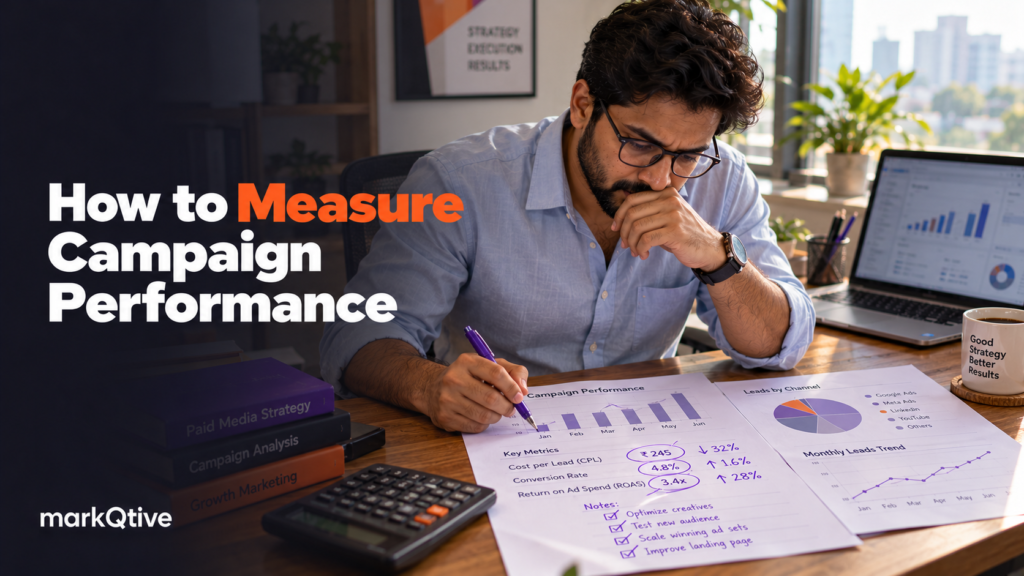
Divide advertising expenditure by the number of leads generated. This reveals how much the campaign spends to produce each enquiry, although it does not establish lead quality.
2. Lead to customer conversion rate
Measure how many leads eventually become paying customers. This helps connect advertising activity with actual business outcomes.
3. Customer acquisition cost
Include the relevant costs of acquiring customers, not just the advertising bill. Depending on your reporting method, this may include agency fees, sales expenses, and other acquisition costs.
4. Return on advertising spend
Compare attributed revenue with advertising expenditure. Interpret the result carefully because revenue is not profit, and attribution may not capture every influence on a purchase.
Practical Tip
Review advertising data alongside customer relationship management records. This helps identify which campaigns generate valuable customers rather than merely inexpensive enquiries.
Common Google Ads Mistakes
Choosing overly broad keywords: Irrelevant searches can consume budget without producing suitable prospects.
Ignoring negative keywords: Excluding unsuitable searches can improve traffic relevance.
Sending every visitor to the homepage: A focused service page often gives potential customers a clearer next step.
Making changes without enough data: Frequent adjustments can make performance difficult to evaluate.
Ignoring sales follow up: Even a relevant lead may disappear when nobody responds promptly.
Before increasing budgets, investigate these issues and confirm that conversion tracking works correctly.
Frequently Asked Questions
What does a Google Ads agency do?
It manages paid search and other eligible advertising campaigns, including targeting, budget management, conversion tracking, and performance optimisation.
How does a Google Ads agency generate qualified leads?
It matches advertisements with relevant searches, improves landing pages, tracks conversions, and evaluates which enquiries are most likely to become customers.
How much does a Google Ads agency charge?
Fees vary according to campaign complexity, advertising spend, service scope, and reporting requirements. Ask for a clear breakdown of management fees and media costs.
How long does Google Ads take to generate leads?
Some campaigns receive enquiries quickly, but dependable performance assessments require sufficient conversion data and lead quality analysis.
Is Google Ads suitable for small businesses?
It can work when sufficient demand exists and customer acquisition costs fit the business model. Budget limits and reliable tracking help control risk.
Conclusion
A Google Ads agency can help businesses attract relevant prospects through better targeting, stronger advertisements, useful landing pages, and accurate conversion tracking. Yet campaign success depends on more than clicks or enquiry volume.
Define what a qualified lead means, measure how enquiries become customers, and assess acquisition costs before increasing spending. Better decisions come from reliable evidence, not impressive dashboard numbers.
Want a clear plan for your brand?
MARKQTIV helps businesses assess paid advertising opportunities, improve lead generation processes, and connect campaign performance with meaningful business outcomes.