
Social Media Marketing: What Is It and How Does It Work?
Introduction
Social media marketing sounds simple. Create a few posts, upload some Reels, gain followers, and wait for customers. If only business growth worked that way.
So, social media marketing, what is it exactly? It is the process of using social platforms to promote a business, connect with its target audience, build trust, and support measurable business goals.
It involves much more than publishing content. Businesses need a clear strategy, useful content, audience engagement, and a way to convert attention into enquiries or sales.
Whether you run a local shop, an online store, or a service business, understanding how social media marketing works can help you make better marketing decisions.
What Is Social Media Marketing?
Social media marketing is the use of platforms such as Instagram, Facebook, LinkedIn, YouTube, and Pinterest to promote a brand, communicate with audiences, and achieve business objectives.
It includes organic content, paid advertisements, community management, influencer partnerships, and performance analysis.
For example, a clothing brand might publish styling videos, answer product questions through Instagram messages, and run advertisements targeting potential buyers.
Each activity serves a purpose. Content attracts attention, engagement builds relationships, and conversion focused campaigns encourage customers to take action.
What does social media marketing mean for a business?
It means using social platforms as part of a broader business strategy rather than treating them as online noticeboards.
A successful approach connects content with customer needs and business goals. Those goals could include generating enquiries, increasing website traffic, improving brand recognition, or selling products.
How Does Social Media Marketing Work?
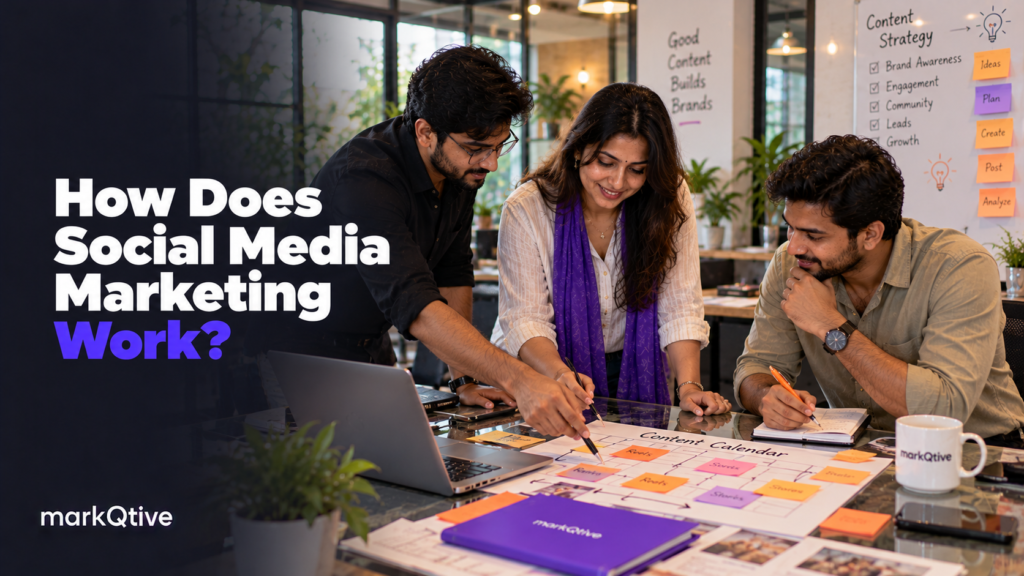
Social media marketing works through a series of connected activities.
Step 1: Identify your target audience
Understand who your customers are, what problems they face, and which platforms they use.
A business selling professional services may find LinkedIn useful, while a fashion retailer may prioritize Instagram.
Step 2: Create relevant content
Develop posts, videos, carousels, and stories that answer questions, demonstrate products, or explain customer problems.
For example, a digital marketing agency could publish a Reel explaining why businesses receive social media enquiries but struggle to convert them into paying clients.
Step 3: Publish and engage
Share content consistently and respond to comments, questions, and direct messages. These interactions help businesses understand their audience and identify potential opportunities.
Step 4: Promote content when necessary
Organic content can build visibility over time. Paid advertising can help reach selected audiences more directly.
The right choice depends on your goals, budget, and existing audience.
Step 5: Measure and improve
Review reach, engagement, enquiries, conversions, and sales. Use these findings to improve future campaigns.
More posts do not automatically produce better results. The objective is to learn what works and make informed adjustments.
Types of Social Media Marketing
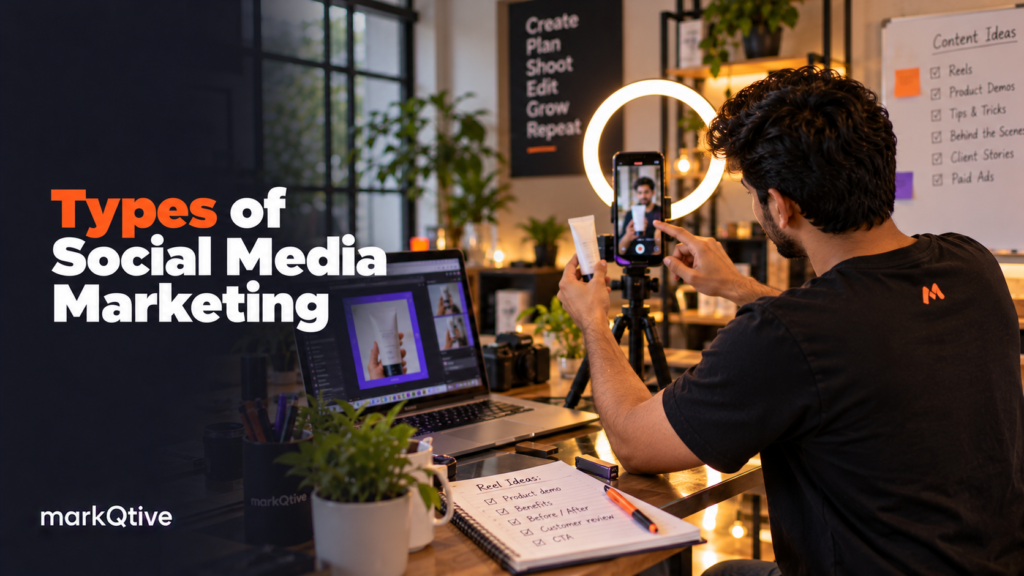
Businesses can use several approaches depending on their needs.
Organic social media marketing: Publishing regular content without paying for distribution. It helps businesses build an audience and communicate their expertise.
Paid social media advertising: Paying platforms to distribute advertisements to selected audiences. It can support lead generation, website visits, and purchases.
Influencer marketing: Partnering with relevant creators to introduce products or services to their audiences.
Community management: Responding to comments, messages, and customer concerns to maintain meaningful communication.
Content marketing: Sharing educational, entertaining, or informative material that helps audiences understand a business and its offerings.
These approaches can work together. For example, a brand might publish product videos organically, collaborate with a creator, and promote its strongest performing content through paid advertising.
Benefits of Social Media Marketing for Businesses
1. Increased brand awareness
Regular, relevant content helps people discover your business and understand what it offers.
2. Customer engagement
Social platforms allow businesses to answer questions, collect feedback, and maintain relationships with customers.
3. Lead generation
Useful content and clear calls to action can encourage potential customers to request information, book consultations, or submit enquiries.
4. Sales opportunities
Product demonstrations, targeted advertisements, and customer testimonials can support purchasing decisions.
However, social media does not guarantee sales. Results also depend on product quality, pricing, demand, website experience, and sales follow up.
Common Social Media Marketing Mistakes
Posting without a strategy: Random content rarely supports consistent business objectives. Define your goals before planning posts.
Chasing followers: A large audience is not necessarily a valuable audience. Focus on attracting people who may genuinely need your products or services.
Ignoring direct messages: Unanswered enquiries can become missed business opportunities. Establish a process for responding promptly.
Copying competitors: Their audience, budget, and business model may differ from yours. Learn from their approach without blindly copying it.
Ignoring analytics: Without performance data, you cannot reliably identify what needs improvement.
How to Measure Social Media Marketing Results
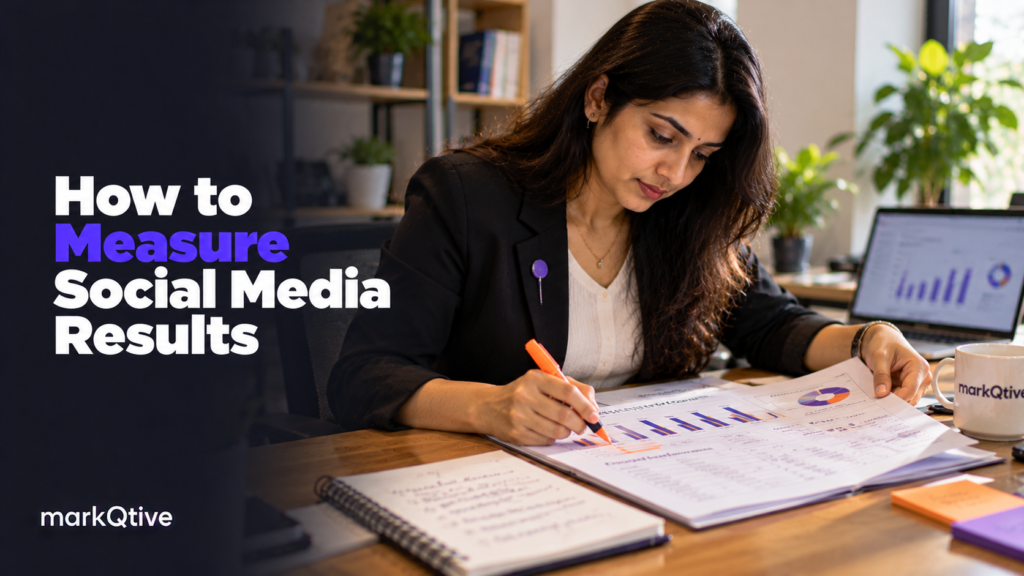
The right metrics depend on your objective.
| Goal | Metrics to track |
|---|---|
|
Brand awareness |
Reach and impressions |
|
Engagement |
Shares, saves, and meaningful comments |
|
Lead generation |
Qualified leads and cost per lead |
|
Sales |
Purchases and attributed revenue |
|
Profitability |
Customer acquisition cost and return on ad spend |
For example, if a campaign generates many enquiries but few sales, examine lead quality, targeting, and follow up before increasing the budget.
Track results consistently and distinguish actual sales from estimated lead value. Clear reporting helps you make better decisions.
Frequently Asked Questions
Is social media marketing suitable for small businesses?
Yes. Small businesses can use relevant content, local audience engagement, and carefully managed advertising to build awareness and attract potential customers.
Which social media platform is best for marketing?
It depends on your audience and goals. Instagram may suit visual brands, LinkedIn may suit professional services, and YouTube may suit educational or demonstration content.
Is social media marketing free?
Organic publishing does not require advertising spend, but content creation and management still require time or resources. Paid campaigns involve additional costs.
How long does social media marketing take to work?
The timeline varies by industry, audience, budget, and strategy. Evaluate progress over an appropriate period instead of expecting immediate sales.
Can social media marketing generate leads and sales?
Yes. Relevant content, targeted advertising, clear calls to action, and effective follow up can support lead generation and sales.
Conclusion
Social media marketing is the process of using social platforms to build visibility, engage audiences, and support business growth.
Understanding what social media marketing means is only the beginning. The real work involves creating useful content, reaching relevant people, measuring results, and improving your strategy over time.
Followers can be useful, but qualified enquiries and sustainable sales matter more when business growth is the objective.
Want a clear plan for your brand?
MARKQTIV focuses on social media management, content strategy, and performance marketing. Explore our services to understand how a structured social media approach can support your business goals.