
Google Ads for Small Business: How to Generate More Leads and Sales
Introduction
Building a steady flow of customers through organic search takes time. During that period, businesses competing for the same audience may capture valuable enquiries through paid search campaigns.
For a small business, Google Ads offers a way to reach potential customers when they look for specific products or services. Instead of waiting for people to find your website, you can place your offer in front of relevant searchers and encourage them to contact you or make a purchase.
But advertising spend does not automatically translate into revenue. If your targeting is too broad or your website fails to convince visitors, your budget can disappear without producing useful leads. Strong results depend on choosing suitable search terms, communicating a clear offer, and making the next step easy for potential customers.
Here is how small businesses can approach Google advertising with a focus on measurable outcomes.
What Is Google Ads?
Google Ads lets businesses pay to promote their offers across Google’s advertising placements. Depending on the campaign, advertisements may appear alongside search results or reach audiences through video, image based placements, and other eligible inventory.
Search campaigns are particularly useful when people actively look for a solution. For instance, a plumbing company serving Pune could advertise to homeowners searching for an emergency repair service in its operating area.
This approach reaches people who have already expressed a need. However, a search query does not always signal an immediate buying decision. Someone comparing service options may need more information before becoming a customer.
How Google Ads Generates Leads and Sales
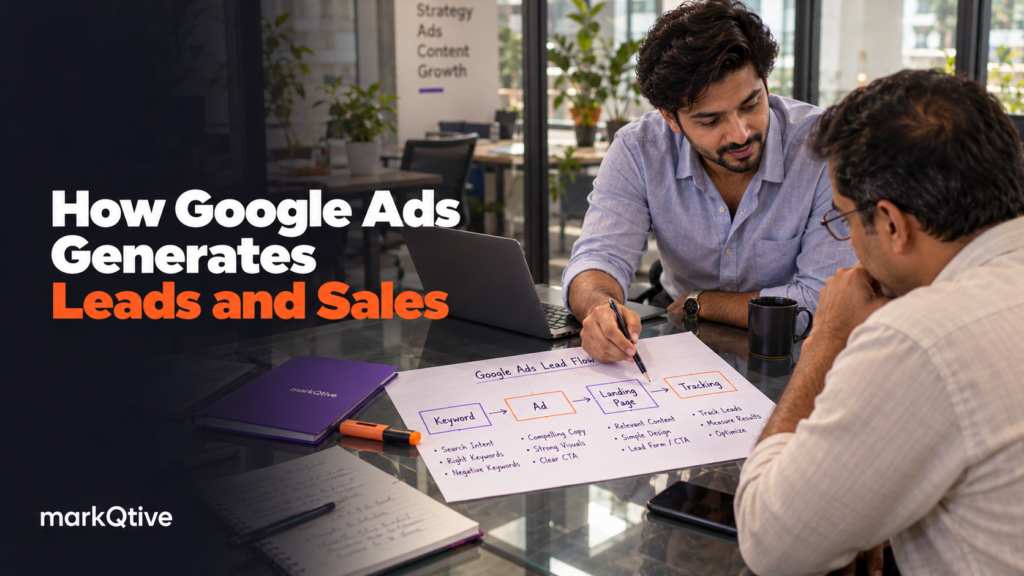
A campaign needs five connected elements to turn advertising spend into business opportunities.
1. Keyword targeting
Choose search phrases that reflect what your business actually sells. An accountant serving local businesses, for example, could focus on searches for business accounting support instead of bidding on broad financial terms that may attract irrelevant traffic.
2. Relevant advertisements
Explain the service, its main benefit, and the next step in plain language. Make claims your business can support rather than promising outcomes you cannot guarantee.
3. A focused landing page
After clicking an advertisement, visitors should find information that directly answers their original search. Include useful service details, relevant pricing information, credible trust signals, and a straightforward way to enquire.
4. Conversion tracking
Measure actions that matter commercially, such as qualified phone calls, completed enquiry forms, and purchases. Clicks show that people interacted with an advertisement; they do not prove that the campaign generated business.
5. Sales follow up
A genuine enquiry can still be lost if nobody responds promptly. Establish a process for contacting prospects, understanding their requirements, and recording which enquiries become paying customers.
Set a Realistic Advertising Budget
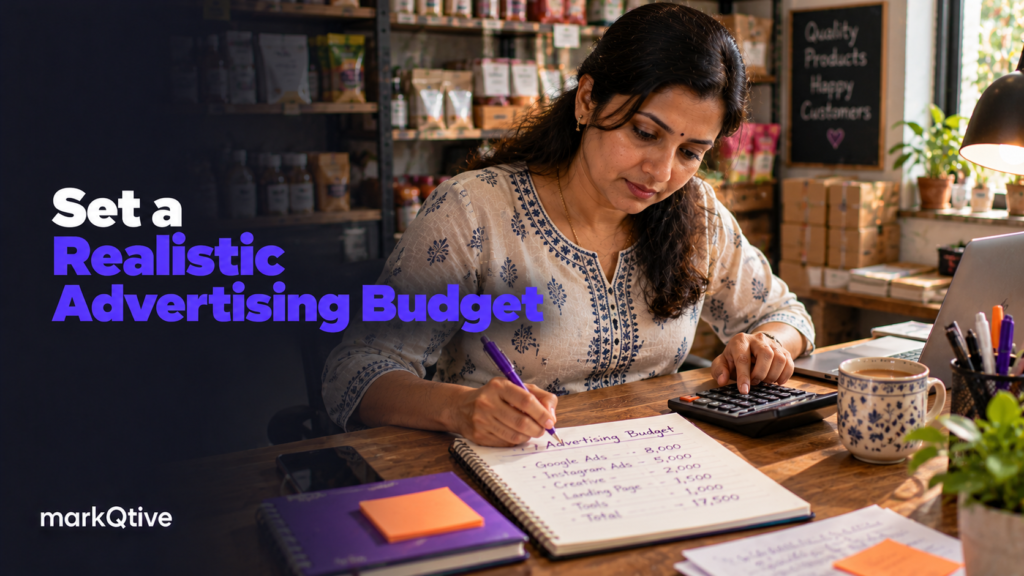
Your starting budget should be based on the economics of your business, not an arbitrary figure copied from another advertiser. Consider customer value, expected conversion rates, competition, and how much you can afford to spend acquiring a customer.
For example, imagine a campaign spends ₹20,000 and receives 40 enquiries. The advertising cost per enquiry works out to ₹500.
If four of those enquiries become customers, the campaign has spent ₹5,000 in advertising for each acquired customer.
These are hypothetical figures, not promised results or industry averages. Actual performance will depend on the market, targeting, offer, and ability to convert enquiries into sales.
Before launching, calculate the number of customers you need and the acquisition cost your margins can support. Keep advertising spend separate from agency charges, landing page development, and other marketing expenses.
Practical Tip
Begin with a controlled budget, verify conversion tracking, and increase spending only when the results justify further investment.
Improve Campaign Performance
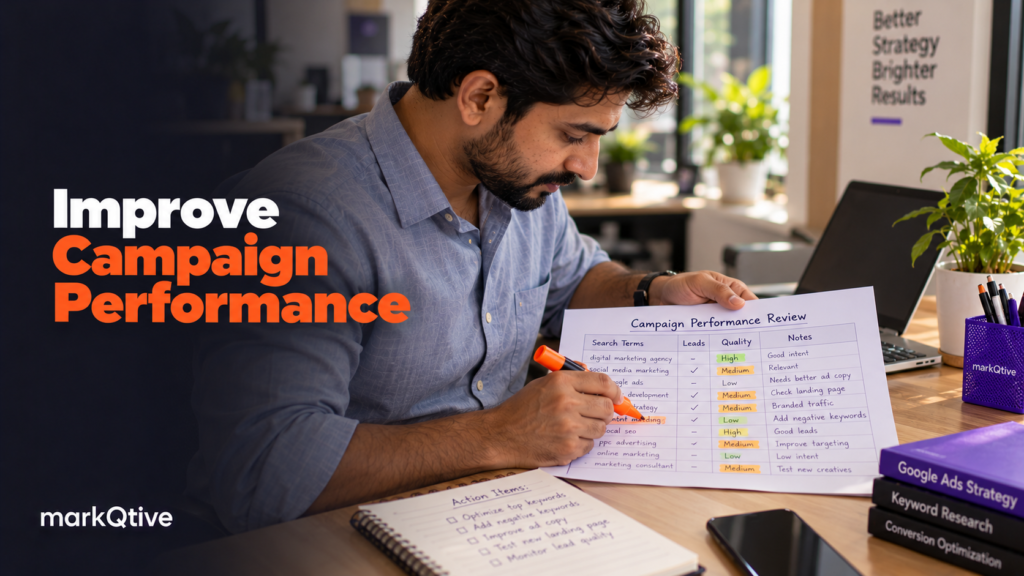
Effective Google advertising services for small businesses involve regular evaluation, not simply switching campaigns on and waiting for leads.
1. Review actual search queries
Inspect the searches that trigger your advertisements. Exclude irrelevant traffic with suitable negative keywords so your budget is not spent on searches unrelated to your offer.
2. Check message consistency
The advertisement and landing page should address the same customer need. If the ad promotes a specific service, send visitors to a page explaining that service rather than making them search through your entire website.
3. Test the landing page
Evaluate mobile usability, loading speed, form length, and the clarity of your offer. A complicated enquiry process can discourage otherwise interested visitors.
4. Evaluate lead quality
Compare enquiry volume with qualified prospects, sales conversations, and completed purchases. A campaign producing fewer but more relevant enquiries may be more valuable than one generating large numbers of unsuitable leads.
Common Google Ads Mistakes
Targeting overly broad searches: General keywords may attract visitors who have little interest in your actual service.
Sending every visitor to the homepage: A dedicated service page can provide a more direct route from the advertisement to an enquiry.
Skipping conversion measurement: Without dependable tracking, it becomes difficult to distinguish productive campaigns from those consuming budget without meaningful returns.
Making frequent changes without enough evidence: Allow sufficient time and data to assess whether an adjustment has improved performance.
Expecting immediate profits: Campaigns require testing, and some offers will not produce profitable results even when managed carefully.
Frequently Asked Questions
Is Google Ads suitable for small businesses?
It can be useful for small businesses that want to reach relevant audiences and control their advertising spend. Profitability depends on demand, competition, customer acquisition costs, and the quality of the sales process.
How much should a small business spend on Google Ads?
There is no universal starting amount. Choose a budget that allows meaningful testing while keeping potential losses within an acceptable limit. Review actual costs and sales before committing more money.
How long does Google Ads take to generate leads?
Enquiries may arrive shortly after launch, but early activity alone does not establish campaign effectiveness. A reliable assessment requires sufficient conversion data and an understanding of lead quality.
Are Google Ads better than social media ads?
Neither channel is automatically superior. Search advertising can connect with people already looking for a solution, while social media advertising can introduce offers to selected audiences. The right choice depends on your objective.
Do I need a website to run Google Ads?
Requirements depend on the campaign and conversion method. For many service businesses, a dedicated landing page makes it easier to explain the offer, build trust, and measure enquiries.
Conclusion
Google Ads can help small businesses reach people who are already looking for relevant solutions, but visibility alone is not a business outcome. Campaign performance depends on targeting, advertising messages, landing page quality, conversion measurement, and consistent sales follow up.
Focus on acquiring suitable customers at a cost your business can sustain rather than chasing clicks for their own sake.
Want to improve your paid advertising strategy? MARKQTIV helps businesses approach performance marketing with an emphasis on lead quality, campaign measurement, and commercially meaningful outcomes.
Want a clear plan for your brand?
MARKQTIV focuses on social media management, content strategy, and performance marketing. Explore our services to understand how a structured social media approach can support your business goals.